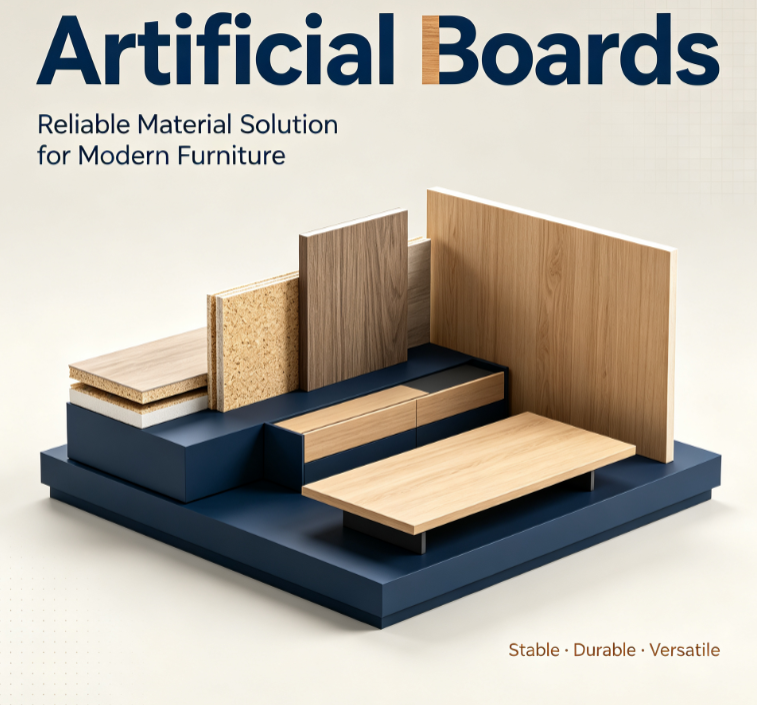
IMIXHOME Strengthens Artificial Boards Solutions to Support Global Furniture and Interior Material Demands
Introduction: Building Better Material Solutions for Modern Living Spaces
The global furniture and interior design industry is experiencing a significant transformation. Consumers are looking for more personalized home solutions, designers are exploring new material possibilities, and manufacturers are seeking materials that combine efficiency, consistency, and visual appeal.
In this changing market environment, Artificial Boards have become an important foundation for modern furniture production and interior applications.
As an engineered wood material, artificial boards provide manufacturers with advantages that traditional materials may struggle to achieve, including stable dimensions, efficient processing, and flexible surface design options.
IMIXHOME focuses on providing furniture and interior material solutions that meet the evolving needs of modern manufacturing and design projects. By supporting customers with reliable Artificial Boards solutions, the company helps furniture producers and designers create products that balance appearance, functionality, and production efficiency.
The future of furniture manufacturing is not only about creating attractive products. It is also about choosing materials that support efficient production, consistent quality, and sustainable development.
Table of Contents
· IMIXHOME’s Role in Modern Furniture Material Solutions
· Why Artificial Boards Are Becoming More Important Globally
· Material Advantages Behind Modern Artificial Board Applications
· Quality Control in Artificial Board Production
· Supporting Different Furniture and Interior Applications
· Artificial Boards vs Traditional Wood Materials Comparison
· Future Opportunities in Engineered Wood Materials
· Frequently Asked Questions
IMIXHOME’s Role in Modern Furniture Material SolutionsModern furniture manufacturing requires materials that can adapt to different design concepts and production environments.
A successful furniture project depends on many factors:
· Material stability
· Surface appearance
· Processing performance
· Production consistency
· Application suitability
IMIXHOME understands that furniture materials need to support both manufacturers and end users.
Through its focus on furniture and interior solutions, the company provides material options designed for modern applications where appearance, efficiency, and reliability are equally important.
For manufacturers, choosing the right Artificial Boards supplier can influence the entire production process, from initial cutting and assembly to final product presentation.
Reliable board materials help reduce production uncertainty and allow manufacturers to maintain consistent quality across different projects.
Why Artificial Boards Are Becoming More Important GloballyThe global furniture industry continues to evolve.
According to international industry analysis, furniture manufacturing remains one of the major application areas for engineered wood products. Growing urbanization, residential renovation demand, and customized furniture trends are creating new opportunities for artificial board applications.
Several factors are driving this development.
Increasing Demand for Customized Furniture
Consumers today expect furniture that matches their personal lifestyles and living spaces.
This trend has increased demand for:
· Modular furniture
· Custom cabinets
· Built-in storage systems
· Personalized interior solutions
Artificial boards provide manufacturers with the flexibility needed to produce customized designs efficiently.
Expansion of Global Interior Projects
Commercial spaces, hospitality projects, and residential developments all require reliable interior materials.
Artificial boards are widely used in:
· Wall panels
· Furniture components
· Decorative structures
· Storage solutions
Their ability to support different finishes makes them suitable for a wide range of design styles.
Need for Stable Manufacturing Materials
Large-scale furniture production requires predictable material performance.
Compared with natural materials that may vary from piece to piece, engineered boards provide more consistent characteristics.
Industry Requirement | Manufacturing Challenge | Artificial Boards Solution |
Customized furniture demand | More complex designs | Flexible processing capability |
Large production volume | Need consistent materials | Stable board performance |
Interior design diversity | Different appearance requirements | Multiple surface finishing options |
Cost management | Need predictable production costs | Efficient material utilization |
Artificial boards have become widely adopted because they solve several practical challenges in furniture manufacturing.
Stable Dimensions
Wood is a natural material affected by environmental factors such as moisture and temperature.
Artificial boards are produced through controlled manufacturing processes, helping improve dimensional stability.
This is especially valuable for:
· Cabinet systems
· Flat furniture panels
· Large interior structures
Stable dimensions help improve assembly accuracy and reduce production adjustments.
Efficient Processing Performance
Modern furniture factories increasingly rely on automated equipment.
Artificial boards work well with:
· CNC cutting systems
· Edge banding machines
· Drilling equipment
· Surface treatment processes
This compatibility helps manufacturers improve production efficiency.
Flexible Design Possibilities
One of the biggest advantages of artificial boards is their adaptability.
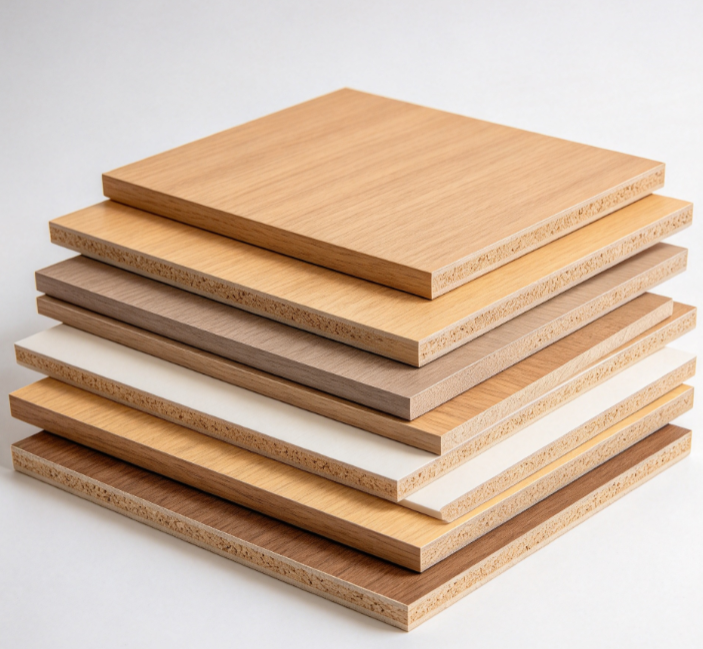
They can support various finishes, including:
· Decorative surfaces
· Wood grain effects
· Painted finishes
· Laminated designs
This allows designers to achieve different visual styles while maintaining production efficiency.
Quality Control in Artificial Board ProductionFor furniture manufacturers, material consistency is one of the most important purchasing considerations.
A reliable Artificial Boards supplier needs to control quality throughout the production process.
Important factors include:
Raw Material Selection
The quality of the base material directly affects final board performance.
Manufacturers need to control:
· Material composition
· Moisture levels
· Internal structure
Thickness and Density Control
Consistent thickness and density influence:
· Assembly performance
· Machining results
· Product durability
Surface Quality Management
The surface directly affects the final appearance of furniture products.
Quality surface control helps ensure better:
· Decorative effects
· Finishing results
· Customer experience
Quality Control Area | Purpose | Impact on Furniture Production |
Raw material management | Maintain stable input quality | More reliable board performance |
Thickness control | Ensure dimensional accuracy | Easier assembly |
Density consistency | Improve structural stability | Better product durability |
Surface inspection | Maintain appearance quality | Higher finished product value |
Artificial Boards are widely used across multiple industries and applications.
Residential Furniture
In modern homes, artificial boards are commonly used for:
· Wardrobes
· Cabinets
· Shelving systems
· Customized furniture
Their processing flexibility makes them suitable for different home designs.
Office Furniture
Commercial furniture requires materials that balance durability and appearance.
Artificial boards support:
· Office desks
· Storage systems
· Partition structures
Hospitality and Commercial Interiors
Hotels, restaurants, and retail spaces often require large quantities of consistent interior materials.
Artificial boards help support:
· Design flexibility
· Efficient installation
· Consistent visual appearance
Artificial Boards vs Traditional Wood Materials ComparisonComparison Factor | Artificial Boards | Traditional Solid Wood |
Production Consistency | High consistency through engineered manufacturing | Natural variation |
Processing Efficiency | Suitable for automated production | Requires more preparation |
Design Flexibility | Supports various finishes and shapes | Depends on wood characteristics |
Resource Utilization | Efficient use of wood materials | Requires larger timber sections |
Application Range | Widely used in modern furniture | Often used for premium applications |
The choice between artificial boards and solid wood depends on project requirements, design goals, and performance expectations.
For many modern furniture applications, artificial boards provide an effective balance between efficiency and appearance.
Future Opportunities in Engineered Wood MaterialsThe artificial board industry continues to develop as global furniture manufacturing becomes more advanced.
Several trends are expected to influence future growth.
More Sustainable Manufacturing
Environmental considerations are becoming increasingly important.
Future artificial board development will focus on:
· Improved resource efficiency
· Better production processes
· More environmentally responsible solutions
Advanced Surface Technologies
Consumers continue to demand more attractive and realistic furniture designs.
Future materials will likely focus on:
· Better textures
· More durable surfaces
· Wider decorative options
Greater Customization Capability
As furniture markets become more personalized, suppliers will need to provide more flexible material solutions.
Manufacturers that can support different project requirements will have stronger opportunities in global markets.
How IMIXHOME Supports Global CustomersAs furniture and interior industries continue to evolve, reliable material suppliers play an important role in helping manufacturers achieve better results.
IMIXHOME focuses on providing furniture material solutions that support modern design and production requirements.
Through reliable Artificial Boards solutions and application-oriented support, the company helps customers create furniture products that meet expectations for quality, efficiency, and design flexibility.
For furniture manufacturers, interior designers, and project developers, selecting the right material partner can improve production stability and create long-term value.
Frequently Asked Questions1. What are Artificial Boards commonly used for?
Artificial Boards are widely used in furniture manufacturing, interior decoration, cabinets, wardrobes, office furniture, and commercial projects.
2. Why do manufacturers prefer Artificial Boards?
Manufacturers choose artificial boards because they provide stable dimensions, efficient processing performance, and flexible design options.
3. Are Artificial Boards suitable for customized furniture?
Yes. Their consistent structure and processing flexibility make them suitable for customized furniture production.
4. What should buyers consider when selecting Artificial Boards?
Buyers should evaluate material quality, surface performance, thickness accuracy, supplier reliability, and application requirements.
ConclusionThe global furniture industry is moving toward greater customization, efficiency, and material innovation. In this environment, Artificial Boards are becoming an increasingly important solution for modern furniture and interior manufacturing.
With advantages such as stable performance, flexible processing, and diverse design possibilities, artificial boards help manufacturers respond to changing market demands.
IMIXHOME continues to support customers seeking reliable furniture material solutions by focusing on product quality, application flexibility, and modern manufacturing requirements.
Related Articles